



“Immature poets imitate; mature poets steal; bad poets deface what they take, and good poets make it into something better, or at least something different.”
T. S. Eliot
This summer, I showed a friend on holiday how to use a ‘computer use’ feature with Codex, where an agent is given permission to take actions on your computer, clicking and typing as a human would.
As someone who thought ChatGPT was a cute chatbot, needless to say, when those eyes widened in equal parts curiosity and horror, that was the closest I’ve come to watching someone see an alien.
Something I’ve been noticing all summer, talking to clients and friends founding companies in London: the opportunity isn't in building the next tool. It's in getting inside the ones people already have.
Saturation Point

There are too many tools.
They all demand our attention every single day, and we only have so much of this to give.
You ask an AI aficionado like me, then yes, I can recount and even enjoy learning about new tools.
However, if you ask my wife or my friends about new platforms and tools, especially in AI, they have no interest. Sure, it’s my job to care, but it’s not theirs.
But it wasn’t my friend’s fault that he just turns off at the mention of AI now; his day is full enough as it is.
It doesn’t help that social media is part of our daily lives, from waking to sleeping. And that interaction encourages creators to feed this cycle of endless content creation. (The irony as I write on Substack is not lost on me)
But that’s the point we need to think about.
There’s an idea that stuck with me from “What We Owe The Future” by William MacAskill. He uses the metaphor of molten glass: societies stay malleable for a time and can be blown into many shapes, but the glass may cool and set, and change after that is far harder.
It’s a powerful metaphor, one that is playing out before our eyes and is relevant to every investor, business owner, and builder reading this.
The 2010s were an amazing period of societal habit change, during which we saw people become increasingly addicted to their smartphones.
I grew up in a time when going on the Tube in London meant awkwardly sitting, perhaps with your iPod or a book in hand. Otherwise, you would stand and allow your default mode network to take over.
Now you’d be hard-pressed to find anybody without their phone in their hand.
Most narratives on this topic talk about the tragedy of losing human connection. However, seeing past that, it’s actually a really interesting point.
People in general have now changed their habits to such a degree that it’s hard to unseat them.
There has been, in a sense, a time of glass making. The big tech giants that have captured our attention have done so well that it is now orders of magnitude harder to displace.
"As a good rule of thumb, proprietary technology must be at least 10 times better than its closest substitute in some important dimension to lead to a real monopolistic advantage."
Peter Thiel, Zero to One
That said, if habits were really set, ChatGPT and Claude wouldn’t exist. It is certainly the largest change in behaviour in a decade, but again, that’s because it can provide information on how to fix my boiler much faster than Google used to.
An (ad)Venture of Lemmings
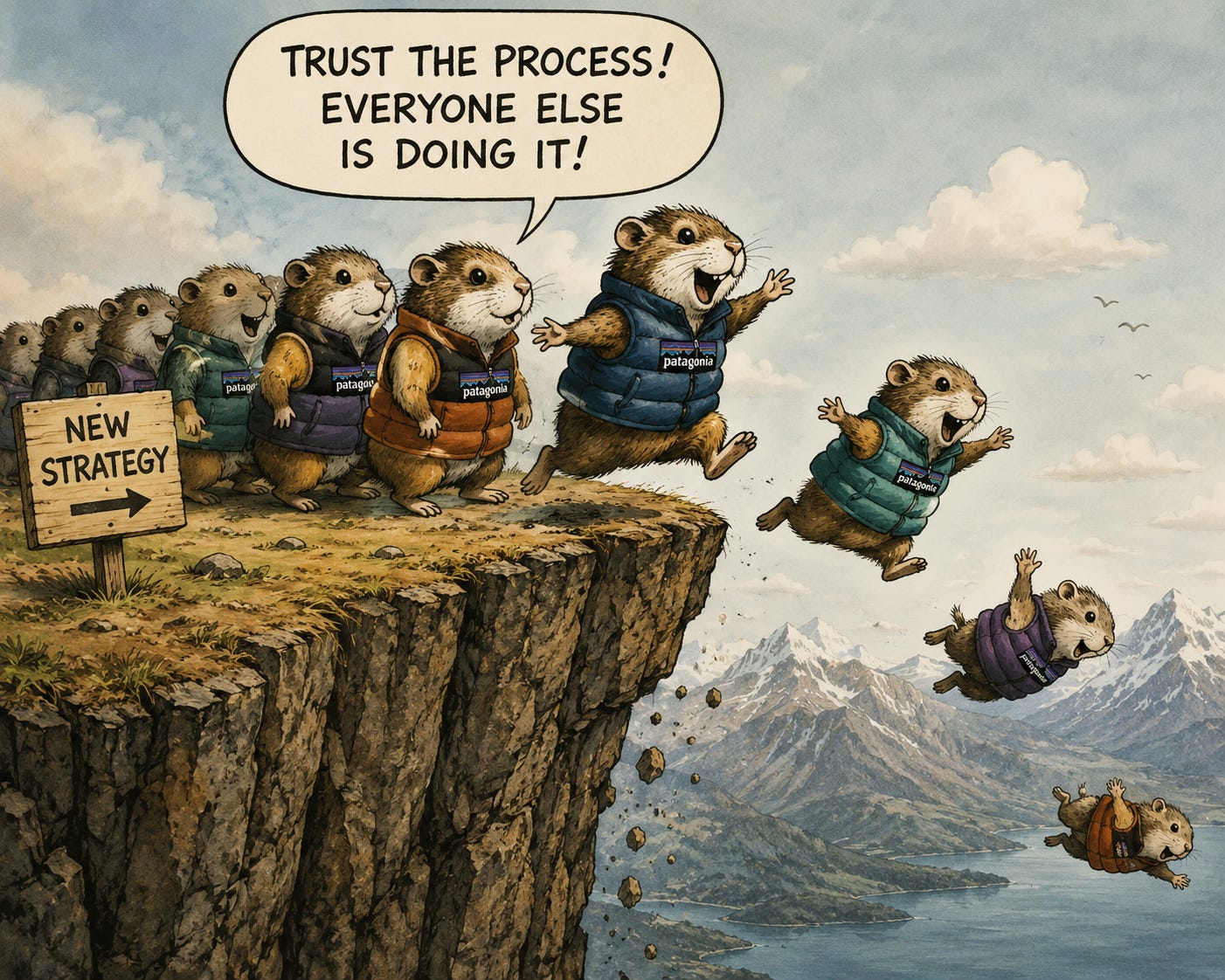
You may have noticed that venture capital rarely moves alone.
Once a category begins to look inevitable, money, founders and competitors tend to arrive all at once.
Look at the electric cycles now strewn across major cities. The companies seemed to emerge from the woodwork at the same time, each fighting for the same streets, riders and attention.
But surely all that competition makes each individual bet worse?
This misses the bigger picture. Every new company makes a category more visible, more familiar, and easier to try.
Yes, they compete for customers, but you know what?
They do so whilst helping to create behaviour change.
The effect is often a critical mass that a new market needs. More products appear. More people encounter them. So the flywheel goes.
So competition is sometimes friendly.
And AI is the latest iteration in this FOMO-go-round, but the thing is, it’s the sheer size of the collective investment that forces businesses to consider AI.
It has created awareness, experimentation and no shortage of tools. But attention is not adoption, and adoption is by no means retention.
So yes, a technology can be transformative and yet still fail to become part of an organisation’s ordinary behaviour.
Entrepreneurs see bad retention whilst business owners see failed pilots.
Let a Hundred Flowers Bloom (AKA Spray and Pray)
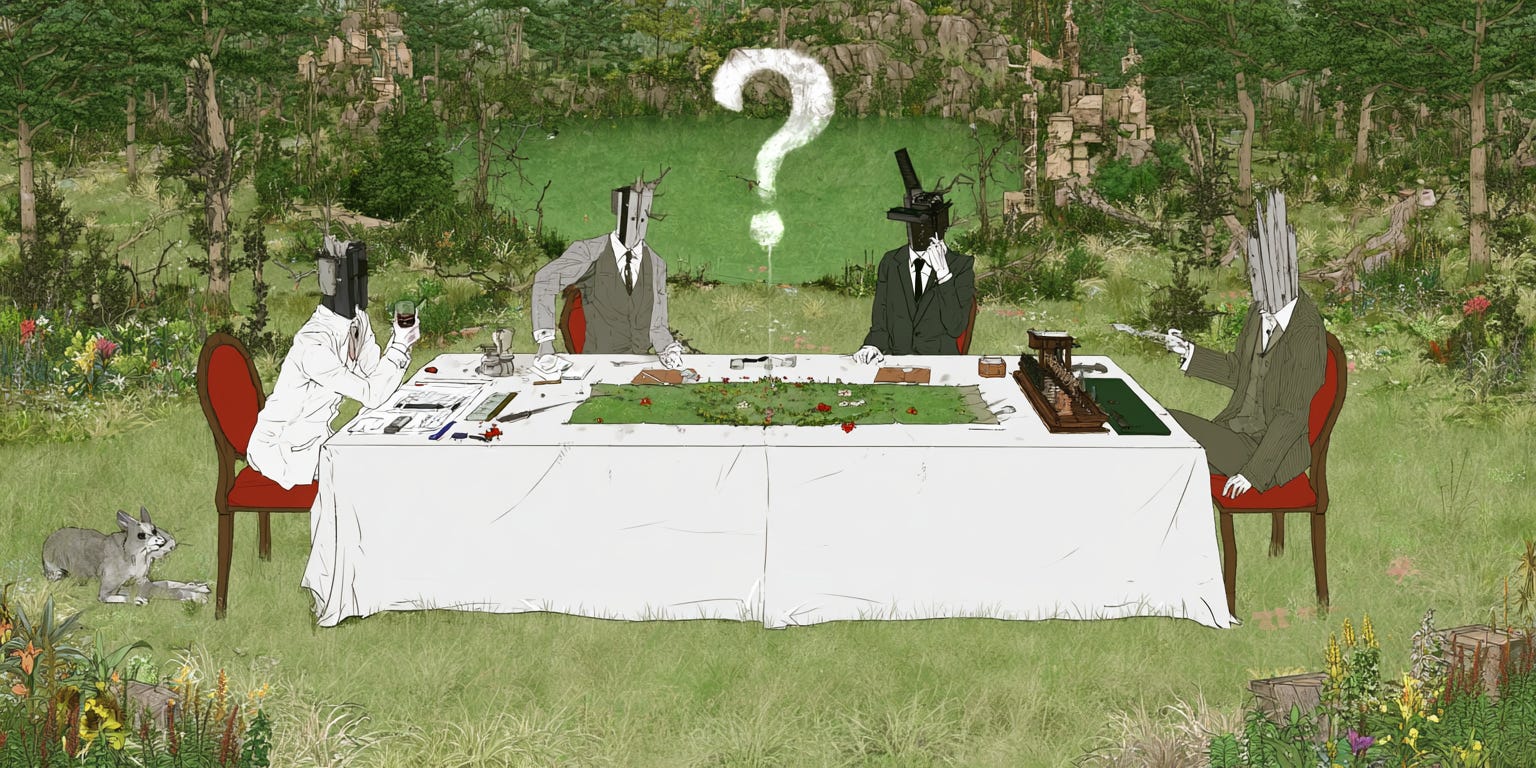
For the AI labs, some may call it lean startup methodology systematised; others call it hit-and-hope.
Google is going through their part in this, with many different ideas, from Pomelli to Jules to Gemini CLI to Antigravity. The list goes on, and so does the confusion.
Their strategy has been to create as many tools as possible, launch them, and see which ones survive. It’s agile, it’s smart, but it’s also about understanding the market and being unsure of what will crack it next.
OpenAI itself has struggled: Atlas was shut down after 9 months whilst Sora couldn’t keep anyone.
Sam Altman himself talked about competition for attention with TikTok's appeal. He deliberately became addicted to it as an experiment, only to find himself on the couch for hours on a Saturday afternoon.
He deleted it. Why? “It was too powerful.”
Trojan Horse Product Strategy
As a strategist in consulting, one of the key things we learned was how to break down each constituent part of a problem and examine it for what it was.
If I’m going to the sweet shop to consult on how they can increase sales, I would consider myself a customer of the sweet shop, as well as the interaction points between the sweet shop and the customer. Those points may be online, in-store, etc., and make no mistake, those interaction points are extremely important and too often overlooked.
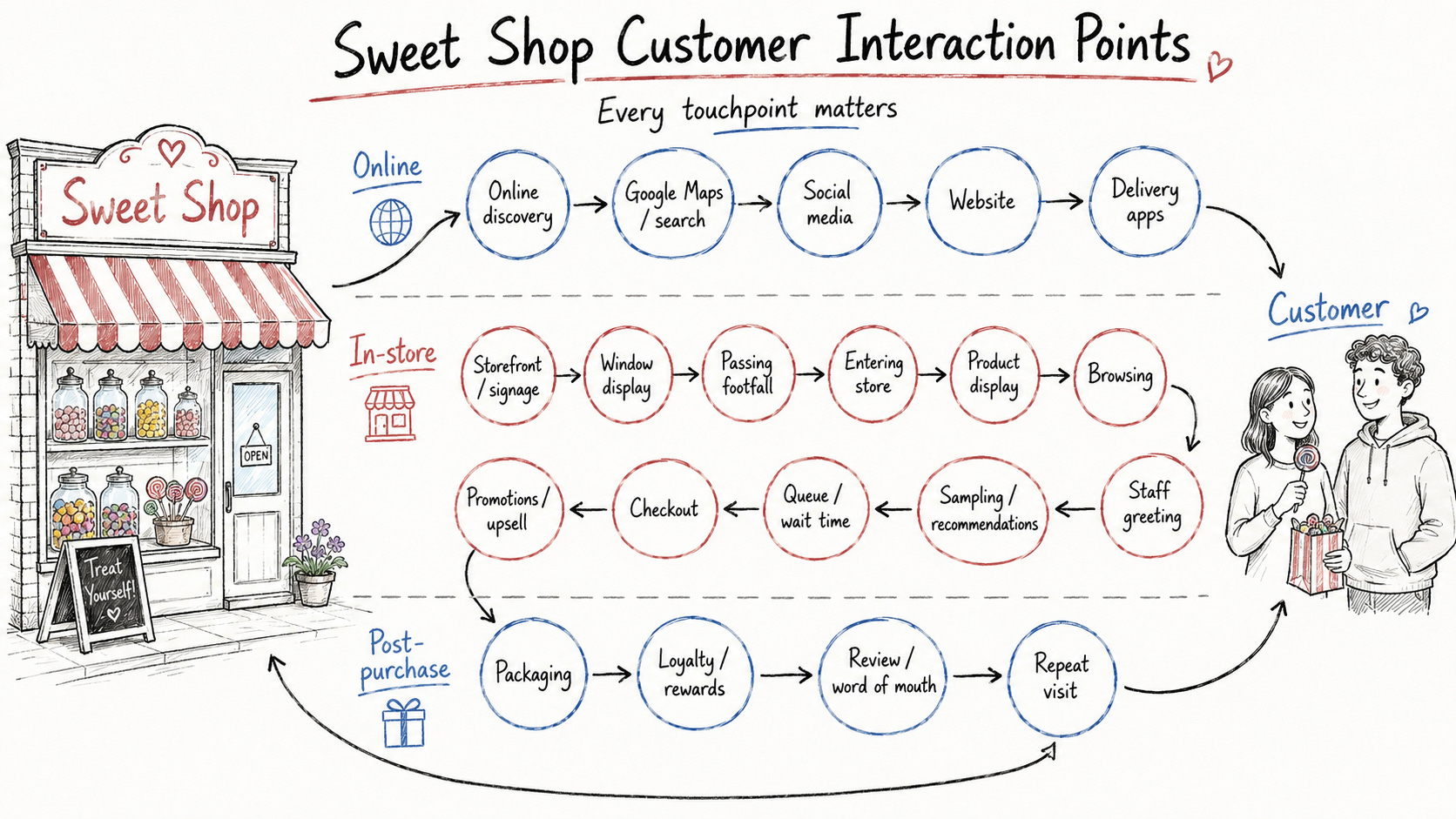
We’re now at a stage where the interaction points between companies and their customers are largely established. Sam Altman illustrated it very well: the platforms we’re used to are that good. How do you get around this? How do you compete with this?
The answer is you don’t, but what do you do? For most companies, you can’t simply compete with these platforms, nor can you piggyback on the ones that can throw you off.
But smart startups are finding ways.
One such startup is Stanley AI.
The number of comments saying this was the best onboarding process they’ve ever been through was off the charts. You might wonder why they didn’t choose a platform as their primary point of interaction. They chose iMessage and SMS as the front door, with web, iOS and Telegram behind it. Their agent only communicates with you via chat. OpenClaw was what pushed this trend into the mainstream in the West, although now we have AI coworkers in Slack, Luzia for WhatsApp in Latin America, etc. Even xAI’s Grok Bot takes this rhythm; you message it the way you’d text a colleague.
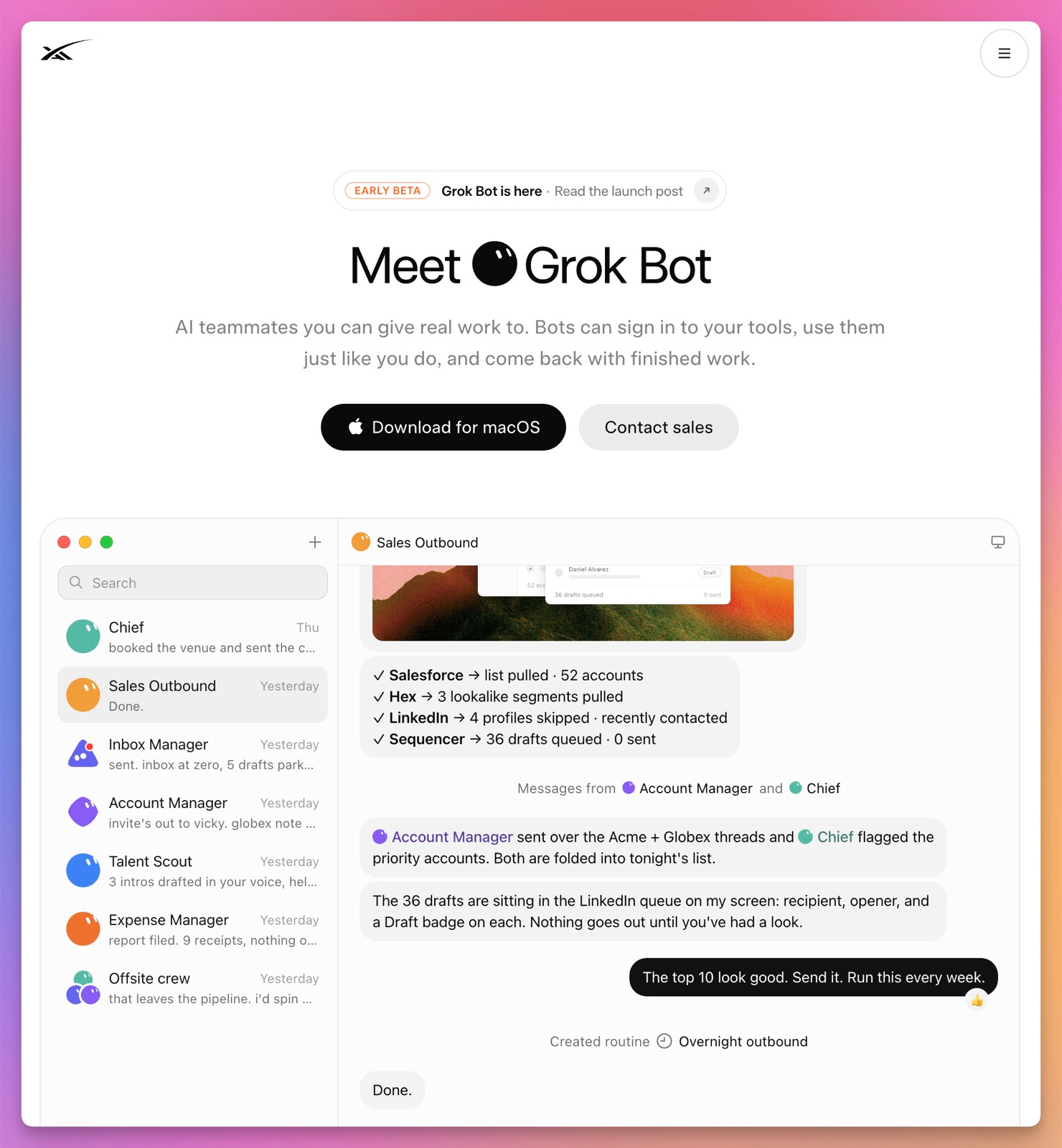
These win not just because they’re simple in a time of complexity and confusion, but also because they’re willing to be wily, meeting their customers where they already are.
So what?
When building or introducing new tools to the big, wide world or within a company, look closely at what already exists.
Habit-lovers would call it stacking.
Before any idea or semblance of trying to get people to use AI or your new tool, whether consumer- or business-related, first map out exactly what the current state is.
What are the tools that people are currently using? Where are those major interaction points? What are the habits that they have?
You will, I dare say, be hard-pressed to find any opportunity to displace those tools, so try to figure out how you can create a product within them.
If you’re a UI/UX designer, these are hard times, but that’s why the bar for taste has risen so dramatically.
Although if this trend continues, unfortunately, taste might not be the fallback ‘skill’ that so many are cracking it up to be.
Thanks for reading.